 Equipo ViaParaguay
Paraguay is the best-kept secret at the heart of South America. Surrounded by tourism giants — Brazil to the east, Argentina to the south, Bolivia to the northwest — the country has spent decades being flown over by travelers who don't know what they're missing. That changes the moment you set foot on its territory: the silence of the Chaco at dawn, the roar of the Iguazú river without crowds, the carved stones of the Jesuit missions backlit by the afternoon sun, or the blue morpho butterflies of the Pantanal that nobody mentioned to you. This guide is an honest overview of the four destinations every curious traveler should know.
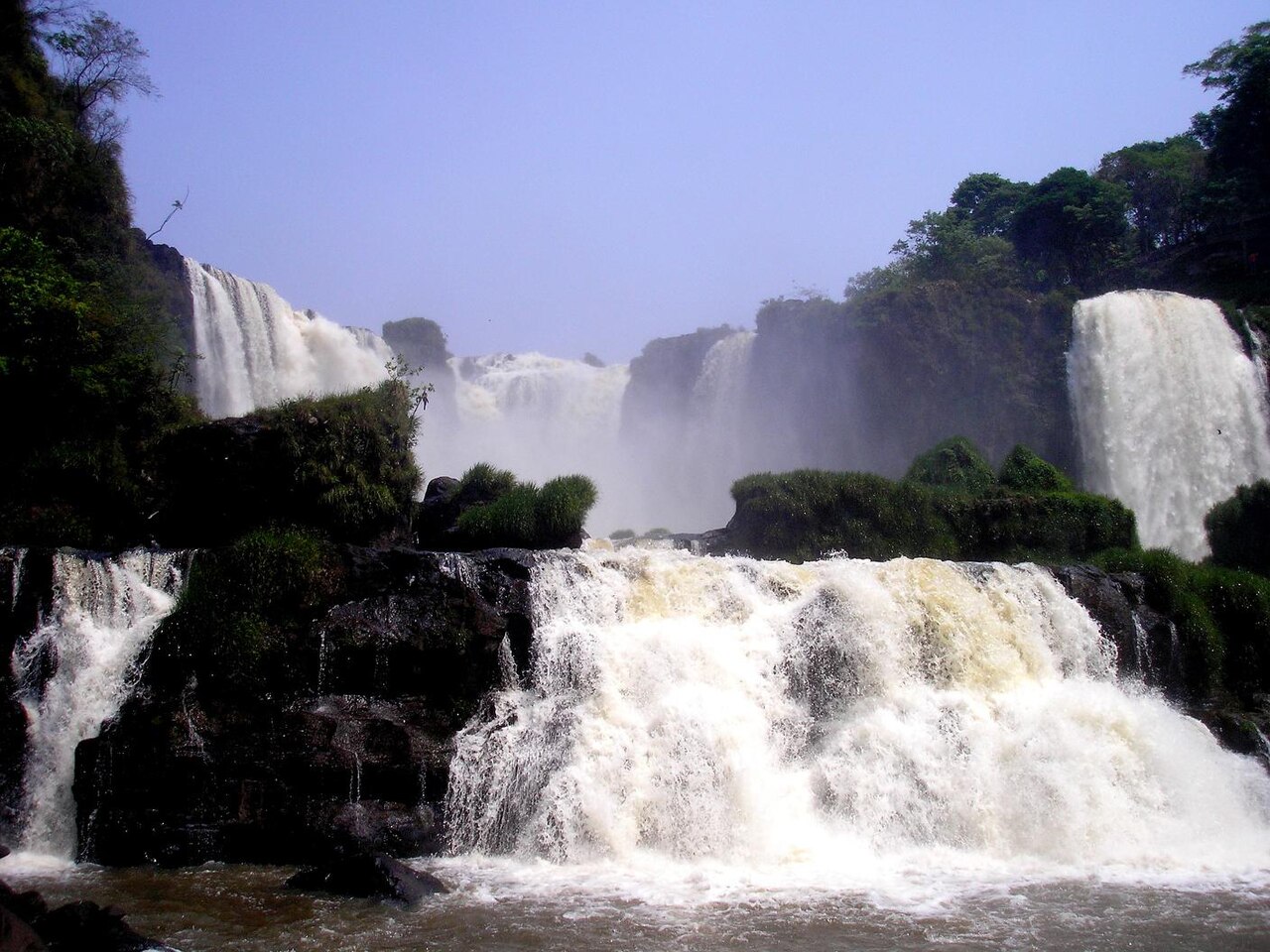
The Paraguayan side of Iguazú: no queues, no noise
When tourists think of Iguazú Falls, they think of Brazil or Argentina. Few know that Paraguay shares the Iguazú river system through its left bank corridor, and that the nearest Paraguayan city — Ciudad del Este, 327 km east of Asunción (4.5 h by car) — is the perfect, cheaper base for visiting the falls. Crossing the Friendship Bridge to Foz do Iguaçu (Brazil) or the Tancredo Neves Bridge to Puerto Iguazú (Argentina) is a 20-minute drive. Meanwhile, accommodation and food in Ciudad del Este cost up to 40% less than on the Brazilian side.
Ciudad del Este itself is a fascinating cosmopolitan market city with Arab, Chinese, Lebanese and Korean communities — a sensory experience unlike anything else in the region.
- Distance from Asunción: 327 km via Route 7 (4.5 h)
- Best season: May to September (less rain, stable flow)
- Base accommodation: hotels from USD 35/night in Ciudad del Este
The Gran Chaco: South America's last wild frontier
The Paraguayan Gran Chaco Boreal covers 60% of the national territory and is, alongside the Amazon, one of the most extensive and least-explored ecosystems on the planet. It is home to the last indigenous communities with minimal outside contact — Ayoreos, Nivaclés, Manjuis, Angaités — and boasts the continent's highest mammal diversity: jaguar, puma, tapir, giant anteater, Chaco peccary and the extremely rare Chaco guanaco.
The gateway is Filadelfia (Boquerón Department), 467 km from Asunción on the Trans-Chaco Highway. Founded by Russian Mennonites in 1930, the city maintains a unique culture: signs in Plautdietsch, cattle cooperatives with the best beef in the country and museums documenting the colonization. Eco-ranch tours depart from here to Estancia La Golondrina (native wildlife, night safaris) and to the Defensores del Chaco National Park, Paraguay's largest protected area at 780,000 hectares.
- Filadelfia from Asunción: 467 km via Trans-Chaco Hwy (5.5 h)
- Temperature: up to 45°C in January; June–August best for wildlife
- Indigenous visits: only with accredited guide and prior permit
The Jesuit Missions: UNESCO World Heritage in the jungle
Between 1588 and 1767, the Jesuits built a network of 30 indigenous reductions in southern South America combining Baroque architecture, polyphonic music and autonomous Guaraní governance. When the Society of Jesus was expelled, many missions were abandoned and the jungle reclaimed them. Today, two of those missions in Paraguay are UNESCO World Heritage Sites (since 1993): Trinidad and Jesús de Tavarangüé.
Trinidad (Itapúa Department, 28 km from Encarnación and 370 km from Asunción) is the best-preserved mission, featuring stone friezes of musician angels carved in red sandstone. Jesús de Tavarangüé, just 12 km away, has an unfinished Baroque facade — left mid-construction when the Jesuits were expelled in 1767 — of exceptional monumental scale.
- Opening hours: 7:00–19:00 daily
- Entry fee: PYG 10,000 (~USD 1.30) per site for foreigners
- Best light: sunrise and golden hour for photography
The Paraguayan Pantanal: Bahía Negra and Alto Paraguay
The Pantanal is the world's largest tropical wetland, spanning 150,000 km² across Brazil, Bolivia and Paraguay. The Paraguayan portion — in the Alto Paraguay Department, centered on Bahía Negra (approx. 20°13'S 58°09'W) and Fuerte Olimpo — is the least known and arguably the most pristine. Black caimans, capybaras, tapirs, giant otters and a density of water birds that rivals any reserve on the planet await the patient visitor.
Access is by charter flight from Asunción (~1.5 h, USD 120–200 one way) or by riverboat from Concepción, a 2–3 day journey up the Paraguay river that is itself an ethnographic adventure. The dry season (July–October) concentrates wildlife on creek edges, enabling superb sightings from rafts or riverbanks.
- Best season: July–October (dry, maximum wildlife concentration)
- Charter flights: from Asunción ~1.5 h, USD 120–200 one way
- Certified guides: register maintained by SENATUR (National Tourism Secretariat)
Three smaller gems: Areguá, Lake Ypacaraí and San Bernardino
Areguá — 30 km from Asunción on Route 2 — is the most picturesque artisan village in central Paraguay: red-tiled colonial houses, ceramics workshops, strawberries in season (June–August) and Lake Ypacaraí as a backdrop. San Bernardino, on the lake's eastern shore, is the summer resort of Paraguay's middle class and home to the area's best bars and restaurants in season (November–March). Rent a speedboat at the main dock to cross the 24 km lake in 15 minutes.
Humberto Rivarola (Canindeyú Department, northeast) is an emerging ecotourism destination with private reserves sheltering tapirs, monkeys and tropical birds less than 200 km from Ciudad del Este, increasingly visible on birding platforms.
Want to plan a trip to Paraguay? Explore our Tourism section → or chat with a local advisor.
Image: FF MM — Wikimedia Commons (CC BY-SA 3.0)