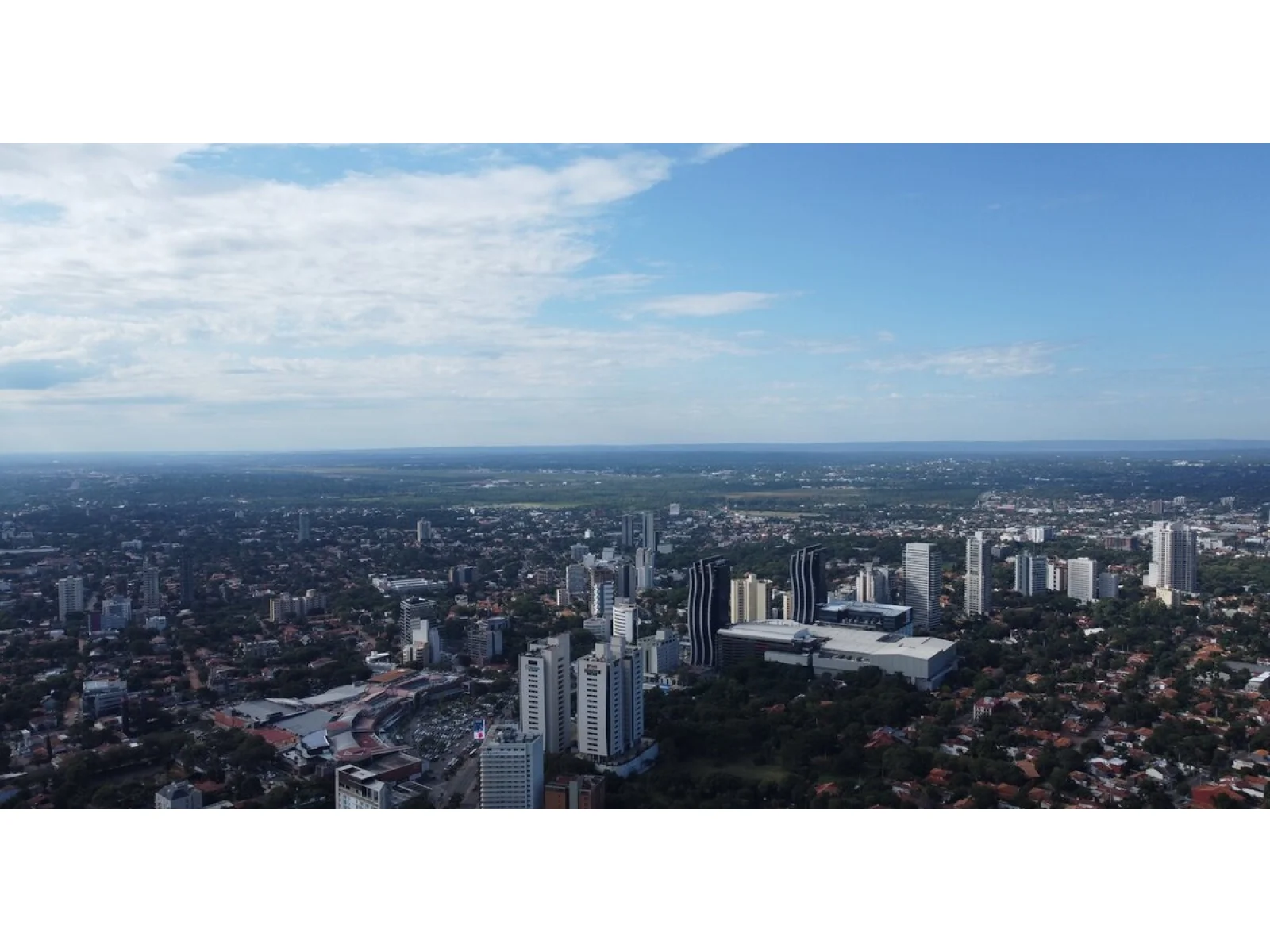

Paraguay is, without doubt, one of Latin America's great economic growth case studies of the 21st century. With relatively scarce natural resources, no sea access, and a population of just nearly 7 million, the country managed to multiply its GDP more than sixfold in three decades: from approximately USD 7 billion in 1990 to USD 47.4 billion in 2025. This article analyzes the keys to that transformation and what it means for investors and people considering settling in the country.
Growth in numbers: 1990–2025
Paraguay's GDP grew at an average rate above 4% annually over the past 35 years — a performance very few regional peers can match sustainably. In 2025, the economy recorded 6% growth, driven by record agricultural output, the construction sector, and financial services. For 2026, the IMF projects 4.2% growth, keeping Paraguay among South America's fastest-expanding economies.
GDP per capita also improved notably: from approximately USD 1,800 in 1990 to over USD 5,500 in 2025, with an upward trend reflecting not just nominal growth but also broader productive distribution.
Inflation: the key difference from the neighborhood
Perhaps the most striking figure about Paraguay in the Latin American context is its 3.1% inflation in 2025 — one of the lowest in the region. To put this in perspective: Argentina posted 31.5% inflation that same year (after years of hyperinflation), and Venezuela accumulated 269.9%. Brazil came in around 5.1%, while Colombia reached 6.2%.
This price stability is no accident. The Central Bank of Paraguay (BCP) has operated an inflation-targeting framework since 2011, with a 4% ± 2 point target. The government's fiscal discipline — capping the deficit at no more than 1.5% of GDP by law since 2015 — complements monetary policy and anchors long-term expectations.
Healthy public debt: 41.2% of GDP
Paraguay's public debt stands at 41.2% of GDP, significantly below the regional average of 56%. This indicator is crucial for institutional investors: manageable debt means lower default risk, more fiscal room to respond to external shocks, and greater capacity for public infrastructure investment. International reserves exceeding USD 10.3 billion cover over 6 months of imports — a solid cushion for an economy of Paraguay's size.
The engines of growth
Agribusiness and food industry: Paraguay is the world's 4th largest soybean exporter and 5th largest beef exporter. The agricultural sector accounts for roughly 40% of total exports, but its multiplier effect on the rest of the economy (transport, finance, trade) is even larger.
Clean, cheap energy: The Itaipú dam — shared with Brazil — and Yacyretá — shared with Argentina — make Paraguay the world's largest net exporter of clean energy per capita. This abundance of near-zero-cost electricity attracts energy-intensive industries, data centers, digital asset mining, and aluminum manufacturing, among other sectors.
Maquila and free trade zones: With Law 7547 passed in September 2025, Paraguay modernized its maquila regime — which charges just 1% tax on locally generated added value — and expanded free trade zone benefits. This positions the country as a competitive hub for light manufacturing and export services in the heart of MERCOSUR.
Foreign direct investment: In 2024, Paraguay received USD 931 million in FDI, a 15% increase from the prior year. Real estate, agro-industry, and financial services capture the largest share of these flows.
Political stability and legal framework
Paraguay has enjoyed uninterrupted democracy since 1989. The legal system protects foreign private property on equal terms with domestic investment, and the country is a signatory to ICSID (International Centre for Settlement of Investment Disputes), guaranteeing international arbitration for investor-state disputes.
The Central Bank maintains free convertibility of the guaraní, with no restrictions on capital movements or profit repatriation — a key differentiator from Argentina and Venezuela.
What does this mean for investors and residents?
A low-inflation, sustained-growth, controlled-debt, free-capital-movement environment creates ideal conditions for medium- and long-term investment. Real estate in Asunción delivers net annual rental yields of 6–8%, with prices ranging from USD 1,200 to USD 2,500 per m² depending on the neighborhood — levels that still have upside compared to other regional capitals.
For those considering residency, macroeconomic stability means the guaraní's purchasing power against the dollar remains relatively stable, services don't face sudden price spikes, and the cost of living over a 3–5 year horizon is predictable.
Want to explore investment or residency opportunities in Paraguay in depth? Browse our directory of specialist advisors and managers or check our complete guide to investing in Paraguay.