 Equipo ViaParaguay
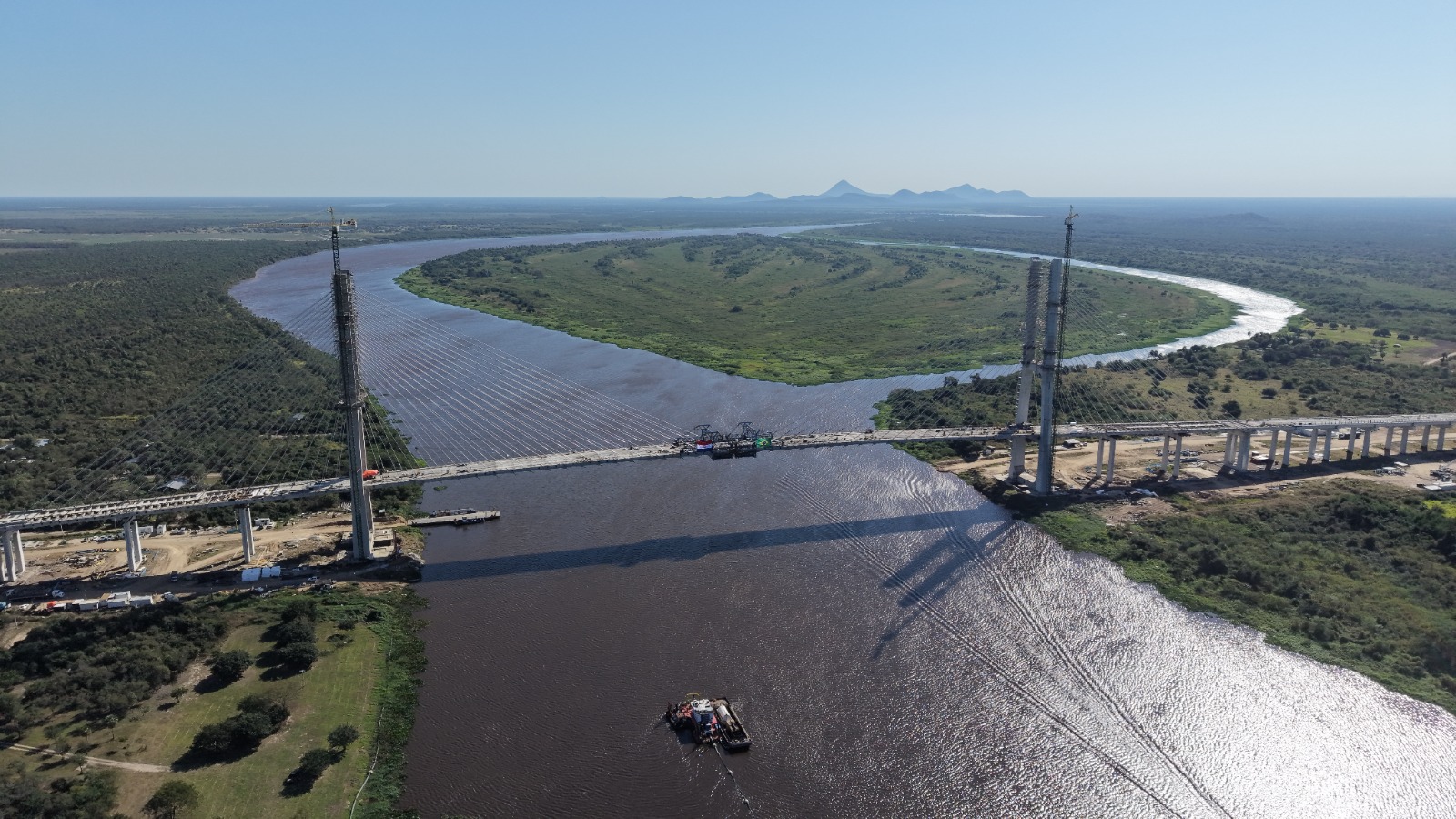
The new Bioceanic Bridge connecting Carmelo Peralta (Paraguay) and Puerto Murtinho (Brazil) over the Paraguay River guarantees maximum structural safety and is practically impossible to overload, Paraguay's Ministry of Public Works and Communications (MOPC) confirmed on July 23, 2026, citing engineer Guillermo Capellán, project designer and head of inspection for the JYI Consortium.
The structure was engineered under AASHTO standards (American Association of State Highway and Transportation Officials), the international reference standard for road bridges. "The actual loads that will circulate cannot pose any problem," Capellán stated.
Safety margins well above real-world use
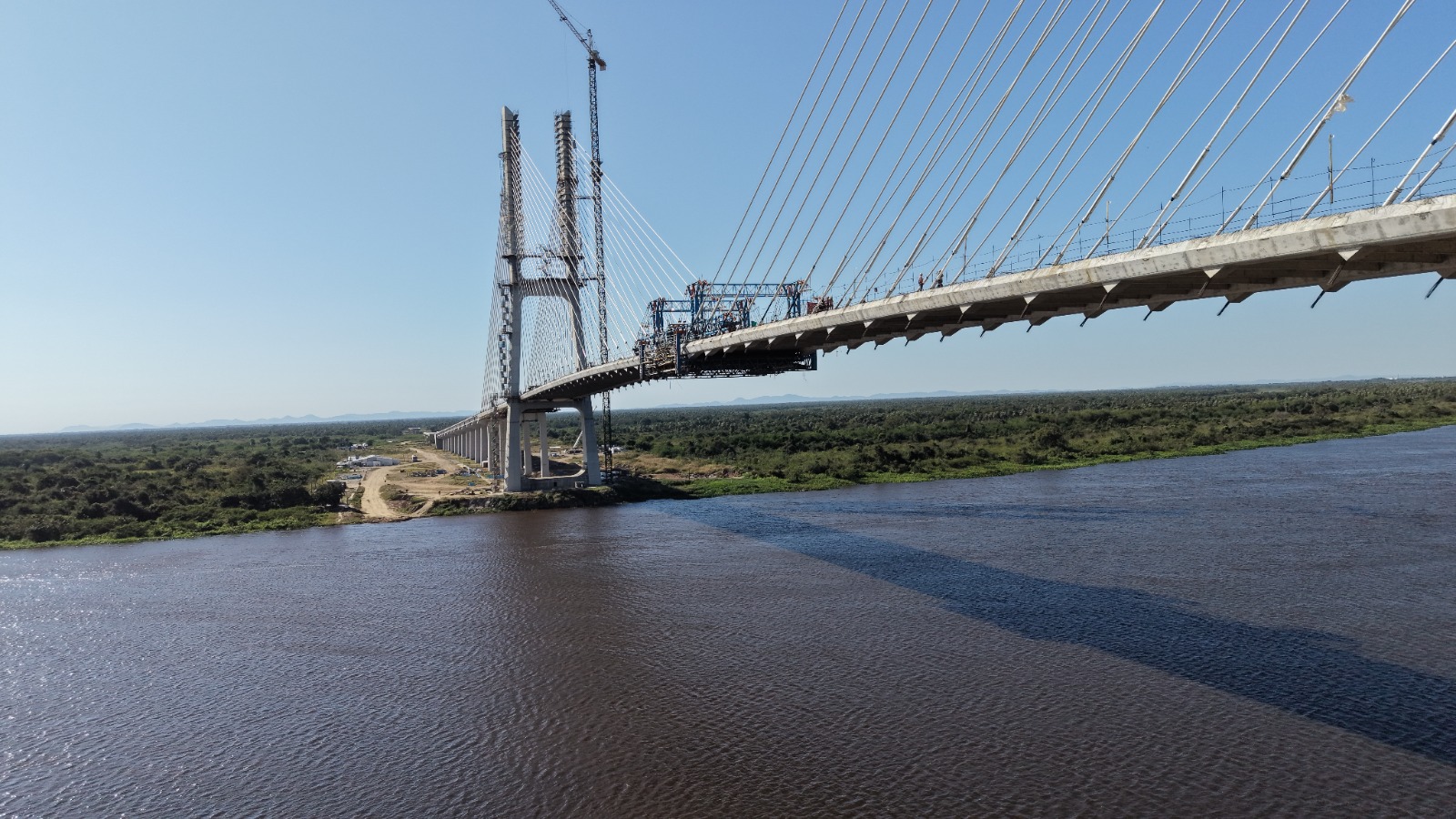
As technical inspection lead, Capellán stated the structure carries strict international safety margins. "The regulatory loads it was designed for are well above service loads," he explained, noting the viaduct will comfortably withstand daily heavy vehicle traffic without requiring circulation restrictions.
The test that confirms it: "practically impossible" to overload
On the resistance test planned before the inauguration, the engineer was blunt: "It will be very hard for us to gather all the necessary vehicles. Even with all of them on the bridge, we would probably reach at most 50% or 60% of the load." For that reason, he called it "practically impossible" to reach the structure's maximum supported limit.
The "connection" milestone: the most uncertain stage, overcome
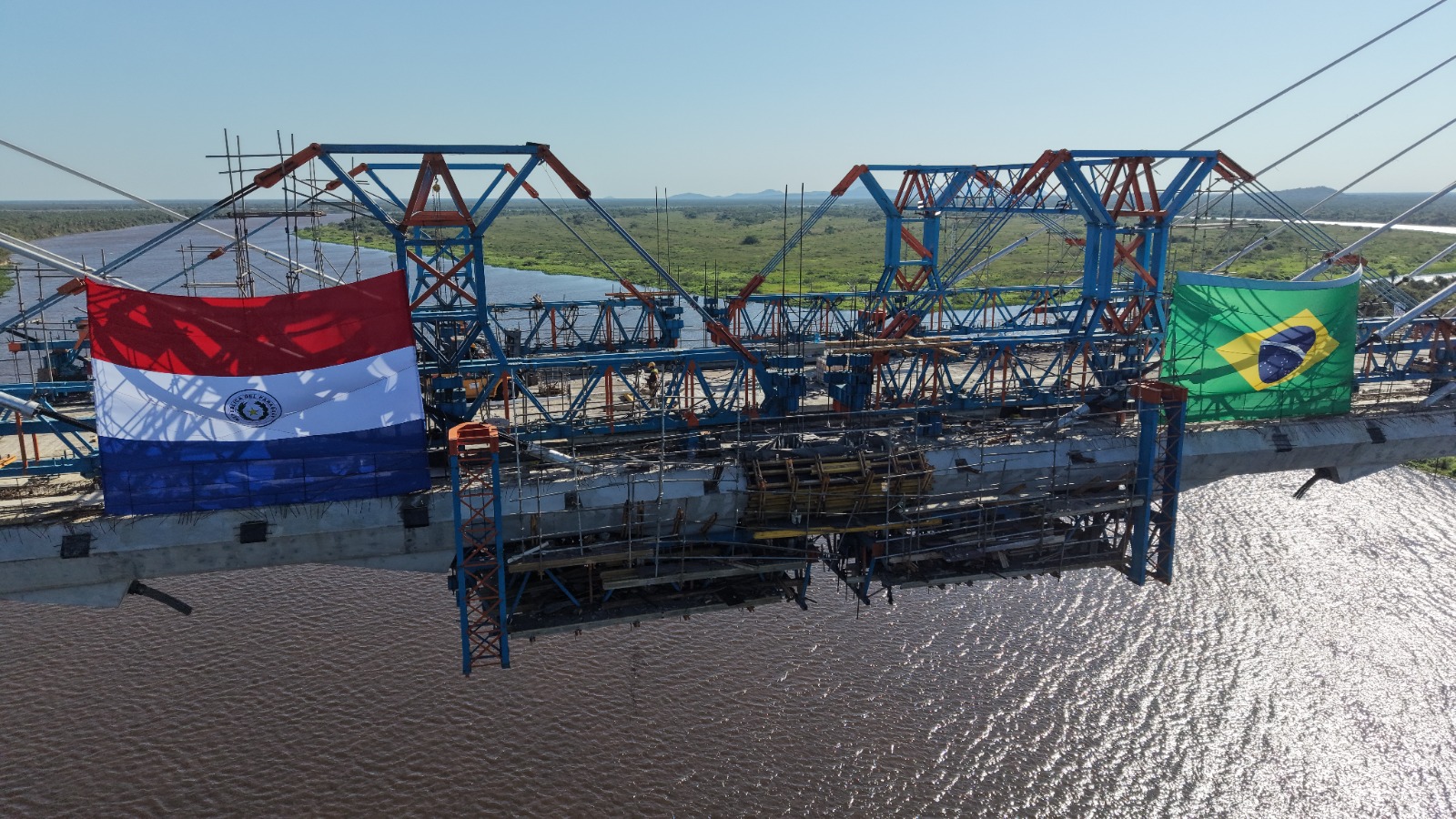
The recent physical connection of both construction fronts, the Paraguayan and the Brazilian, marked the project's most significant moment to date. "From now on there are finishing works and adjustments left, but from a structural standpoint we have already gotten past the stage of greatest uncertainty and complexity," Capellán said.
The specialist also highlighted the invisible technical work behind the project: "Today everyone looks at the scale of the bridge, but behind it there were years of planning and foundations over 40 meters deep," he concluded.
Technical specs: one of the country's largest engineering challenges
- Total length: 1,294 meters
- Cable-stayed section: 632 meters
- Main span: 350 meters
- Height: over 140 meters
- Foundations: over 40 meters deep
- Roadway: one lane per direction at initial opening, with a deck designed for future expansion to four lanes without modifying the foundations
Remaining work includes asphalt paving, barrier installation, lighting, and road signage. While the final timeline depends on the authorities, Capellán said he expects the project to be finished this year.
90% complete at the end of June
According to MOPC itself, the bridge was nearly 90% complete at the end of June 2026. The figure confirms steady progress: the project stood at 54.7% in May 2024 and reached 63.91% by November of that year.
An employment engine for Alto Paraguay
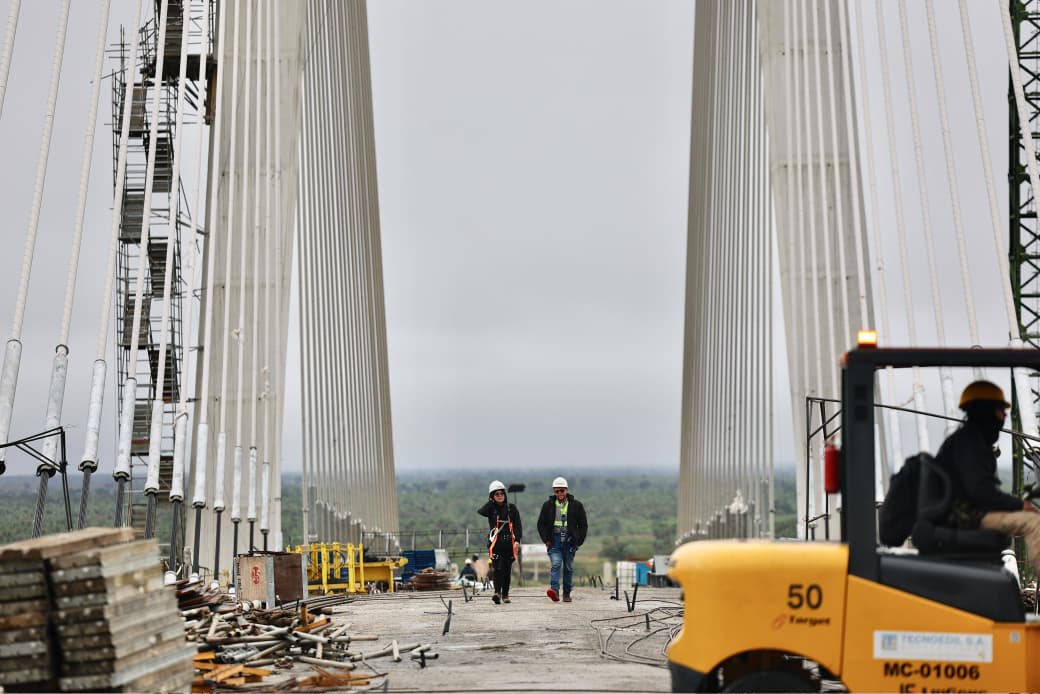
Beyond the engineering, the project left an economic mark on the region. According to the PY-BRA Binational Consortium — the party responsible for construction — around 500 people were involved during peak activity, including engineers, architects, technicians, specialized operators, and support staff. Currently, about 250 workers, including contractors and subcontractors, remain engaged in the final tasks.
The project also opened labor inclusion opportunities: 13 members of the Ayoreo community joined the works, along with between 15 and 20 women in various roles. Currently, 93.6% of workers are Paraguayan; the rest includes 15 Brazilians and one Venezuelan.
The Industrial Safety and Occupational Health (SySO) program provided ongoing training in first aid and work-at-height rescue — key preparation for working safely at over 140 meters.
A key link in the Bioceanic Corridor
The bridge is a central link in the Bioceanic Road Corridor, a roughly 2,396-kilometer logistics network that will connect the Atlantic and Pacific oceans through Brazil, Paraguay, Argentina, and Chile. In Paraguayan territory, the connection will strengthen the integration of the Chaco region with ports and border crossings, boosting trade, production, and economic growth.
The project is financed by Paraguay's share of Itaipú Binacional and driven by MOPC. Design and inspection are handled by the JYI Consortium, while construction is carried out by the PY-BRA Binational Consortium.