 Equipo ViaParaguay
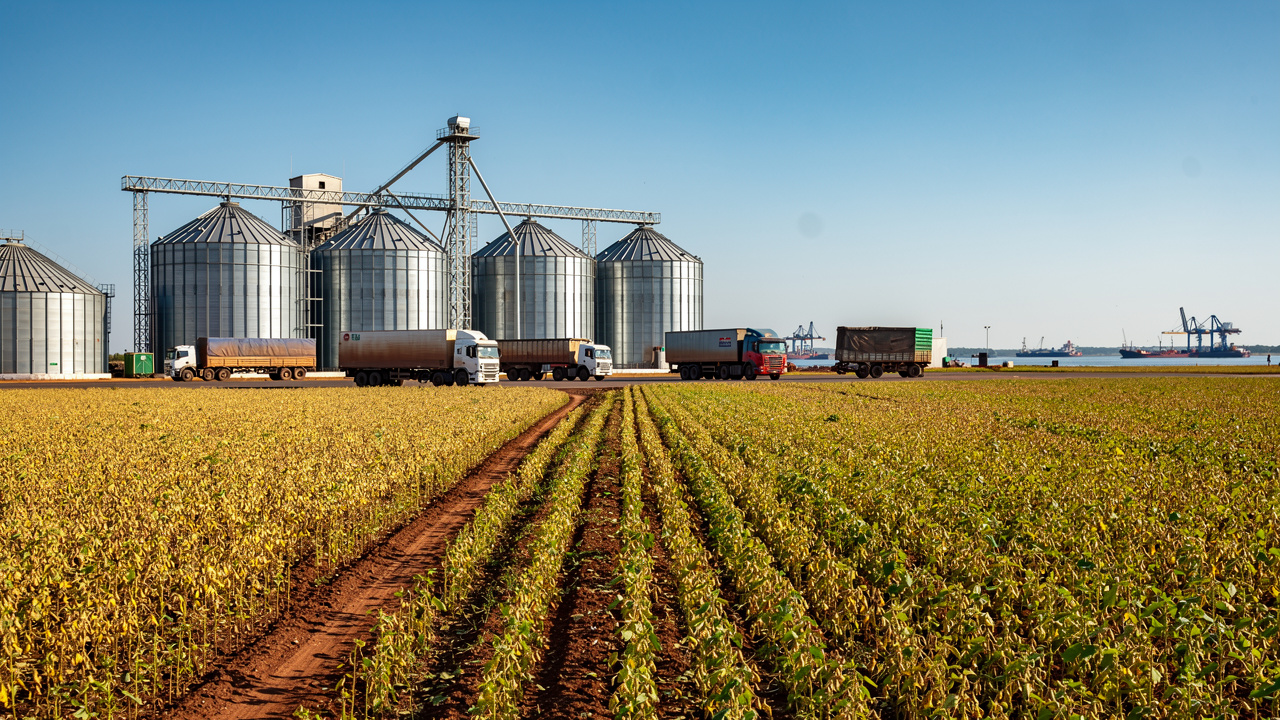
Paraguay has just recorded an unprecedented milestone in its agro-industrial history. The soy complex — encompassing raw grain, derived oils, and soy meal — surpassed US$ 3 billion in exports during the first half of 2026, according to data from the Central Bank of Paraguay (BCP) and the Paraguayan Chamber of Grain and Oilseed Exporters and Traders (Capeco). This is the first time this threshold has been reached in a single semester, marking an all-time record for the Paraguayan economy.
A harvest that rewrites the record books
The trigger for this extraordinary result is the 2025/26 agricultural campaign, which concluded with a production of 12.29 million tonnes of soybeans — a figure that includes the main harvest of 10.9 million tonnes and the off-season crop (zafriña) of 1.4 million tonnes — according to consultancy StoneX. The main harvest alone was "the largest main soy harvest ever recorded in Paraguay," in the words of senior analyst Larisa Barboza.
To put the achievement in perspective: in previous campaigns, Paraguay produced around 10 million tonnes. Production has grown more than 300% over three decades, and the 2026 leap consolidates the country's position as the world's fourth largest exporter of raw soy grain and sixth in the full complex.
The numbers behind the record
Data from the BCP and Capeco reveal a sustained growth trajectory throughout the year:
- January to March 2026: the soy complex generated US$ 1.440 billion in foreign exchange (+39% year-on-year), compared to US$ 1.031 billion in the same period of 2025.
- January to April 2026: the complex reached US$ 1.934 billion, driven by raw soybean exports of US$ 1.510.1 million (+43.2% in value and +37.4% in volume), plus soybean oil (US$ 215.8 million, +31.8%) and soy meal (US$ 203.9 million, +15.8%).
- In volume terms, Paraguay shipped 3.94 million tonnes of soy grain in just the first four months alone — one million tonnes more than in the same period of 2025.
With May representing the peak export month for the new harvest and shipments continuing through June, the soy complex crossed the US$ 3 billion barrier — a threshold no previous campaign had achieved in such a short timeframe.
Beyond soy: the broader export boom
The impact of the record harvest rippled across the entire export economy. Exports under customs regimes grew 18.1% year-on-year and exceeded US$ 4.230 billion in the first four months of 2026, according to an ABC Color report from May 30 citing BCP data. Total exports — including re-exports — reached US$ 6.205.9 billion between January and April, generating a trade surplus of US$ 84.2 million and reversing the deficit of the same period in 2025.
The maquila regime also contributed dynamism with US$ 469.8 million in the four-month period (+29.7%), showing that the boom is not exclusively agricultural but reflects a diversified, expanding economy.
The context: Paraguay, an emerging agribusiness powerhouse
Soy grain exports are directed primarily toward Argentina (89.8%) and Brazil (10%), where they are processed for domestic consumption or re-exported. The leading companies — Cargill (20%) and Bunge (19%) — head shipments alongside 38 other exporting firms.
At the same time, the BCP reports international reserves above US$ 11.500 billion, the highest in the country's recent history, with the gold component growing 37% year-on-year to US$ 1.186 billion. Paraguay ranks among the three countries with the lowest country risk in Latin America (EMBI of 104 basis points at the close of May 2026), according to BCP data.
What does this mean for those looking to invest or live in Paraguay?
A soy export record of this magnitude is not merely an agricultural news item: it is a barometer of the country's macroeconomic health. More foreign currency means greater guaraní stability, higher tax revenues, more employment in logistics, agro-industry, and services, and a greater capacity for public investment in infrastructure.
For foreign investors, Paraguay today combines three conditions rarely found together in Latin America: low tax burden (10% VAT rate, 10% income tax), sustained macroeconomic stability, and an agro-industrial growth cycle that is reinforcing domestic demand. Inflation stood at just 2.4% year-on-year in May 2026 — one of the lowest in the region — while GDP is projected to grow 4% this year according to BCP and IMF forecasts.
"Soy once again confirmed its weight within the Paraguayan economy and became the main driver of export growth during the opening of 2026." — Central Bank of Paraguay, Foreign Trade Report, May 2026.
For those evaluating settling or investing in Paraguay, this record is a concrete signal: the country is experiencing one of its best economic moments in decades, with solid fundamentals that extend well beyond the soy sector.