 Equipo ViaParaguay
In April 2026, Paraguay became the setting for a historic milestone in the global green industry: Atome PLC, a British company listed on the UK capital markets, reached the Final Investment Decision (FID) to build in Villeta — 45 kilometers south of Asunción on the Paraguay River — the world's first industrial-scale commercial green fertilizer plant. With total financing of USD 665 million and a coalition of the world's leading multilateral development banks, the Villeta Project places Paraguay firmly on the international green economy map.
Why Paraguay, and why now
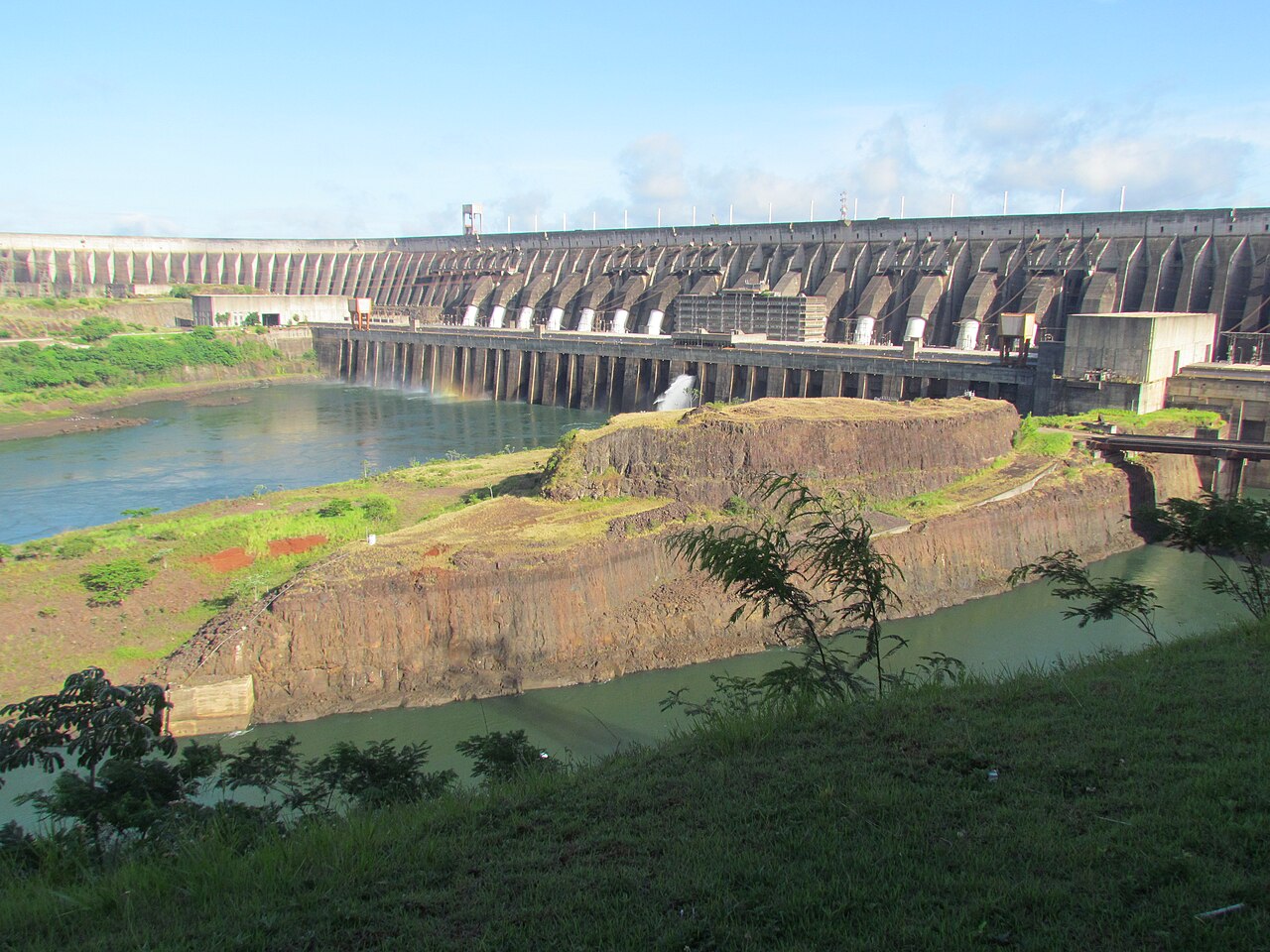
The answer to both questions is the same: Itaipú Binacional. The Paraguayan-Brazilian dam is the world's second-largest hydroelectric plant by energy generation, and it has a singular feature: Paraguay uses only 30% of its 50% share of production, selling the rest to Brazil. This means the country has abundant, stable, and extremely competitively priced renewable electricity — energy currently sold to Brazil for fractions of a dollar per kilowatt-hour.
Conventional nitrogen fertilizer production depends almost entirely on natural gas, making it one of agriculture's most carbon-intensive industries. Atome's technology inverts that equation: it uses Itaipú's hydroelectric power to electrolyze water and produce green hydrogen, which is then combined with atmospheric nitrogen to generate ammonia, the precursor to calcium ammonium nitrate (CAN), the fertilizer the plant will produce.
Energy represents 60–70% of fertilizer production costs. With Itaipú as the source, that equation is resolved structurally in Paraguay's favor.
The financial architecture: USD 665 million without government subsidies
What makes the Villeta Project especially noteworthy — beyond its technological primacy — is its financial structure. The full USD 665 million comes from private capital and multilateral institutions, with no subsidies, guarantees or ecological premiums from the Paraguayan state. That validates the model as economically self-sustaining on its own merits.
The structure is divided into two major components:
- Debt (USD 420 million): coordinated by IDB Invest (the IDB's private sector arm) and the IFC (International Finance Corporation, World Bank Group). Additional lenders include the European Investment Bank (EIB), the FMO (Dutch development bank), and the Green Climate Fund (GCF), the multilateral mechanism created under the Paris Agreement to finance the energy transition.
- Equity (USD 245 million): led by Hy24, the world's largest hydrogen asset manager, with up to USD 115 million. Other participants include the IFC, German development bank KfW DEG, the Danish development fund IFU/IFDK, and — in a significant endorsement of the local financial ecosystem — Paraguayan bank Sudameris Bank.
The simultaneous presence of IDB Invest, IFC, EIB, FMO and the Green Climate Fund in a single project is unusual and signals the multilateral conviction level about Villeta's viability.
The plant: what it will produce and how
The Villeta Project will build a plant capable of producing 260,000 metric tons per year of calcium ammonium nitrate (CAN), a highly soluble nitrogen fertilizer widely used in precision agriculture. To do so, the plant will require 145 MW of installed capacity, drawn entirely from Paraguay's Itaipú-powered electrical grid.
The process is 100% fossil fuel-free:
- Water electrolysis with renewable energy → green hydrogen
- Haber-Bosch synthesis (hydrogen + atmospheric nitrogen) → green ammonia
- Neutralization and granulation (ammonia + nitric acid) → CAN
The projected environmental impact is equivalent to removing millions of gasoline-powered cars from circulation: the plant will avoid 500,000 metric tons of CO₂ equivalent per year, totaling 12.5 million tons over its lifetime — equivalent to eliminating the consumption of 29 million barrels of oil.
The Yara agreement: zero commercial risk in the first decade
One of the factors that unlocked the FID was the signing of a long-term offtake agreement with Yara International ASA, the world's largest fertilizer producer and distributor, headquartered in Norway. Under this agreement, Yara will purchase 100% of the plant's production for the first 10 years of commercial operations.
This contract eliminates market risk during the project's most critical phase. Approximately 90% of production is destined for export, primarily to Argentina and Brazil — South America's two largest fertilizer consumers — in a region that currently imports around 30 million metric tons of fertilizers annually, covering 95% of its needs from Russia, China, and Canada.
Timeline and next steps
- Mid-2026: Atome PLC shareholder approval (required by UK capital market regulations for transactions of this scale) and definitive financial close.
- Second half of 2026: civil works begin at the Villeta site.
- October 2029: full commercial operations launch.
The Villeta Project is not simply a large investment. It validates that Paraguay, thanks to its clean energy and macroeconomic stability, can become a node in the new global green industry. The same multilateral institutions financing Europe's and Asia's decarbonization are committing capital to Paraguayan soil — without subsidies, without sovereign guarantees — because the numbers work.
In a moment when food security and the energy transition are two of the world's greatest concerns, Paraguay is solving both with a single project: fertilizers that feed fields, produced with energy that doesn't pollute.