 Equipo ViaParaguay
Paraguay's poultry industry is undergoing rapid transformation. In 2026 alone, three major forces—record investments, expanded production capacity, and the opening of new export markets—are converging to make this sector one of the most attractive in regional agribusiness.
Investments that redefine scale
At the heart of the expansion is Brazilian giant JBS, which committed USD 145 million to expand its Paraguayan operations. The immediate impact is already visible: the company has grown from slaughtering 20,000 chickens per day to 40,000, with a stated target of reaching 100,000 birds per day by the end of 2026—the most significant capacity leap in the sector's recent history.
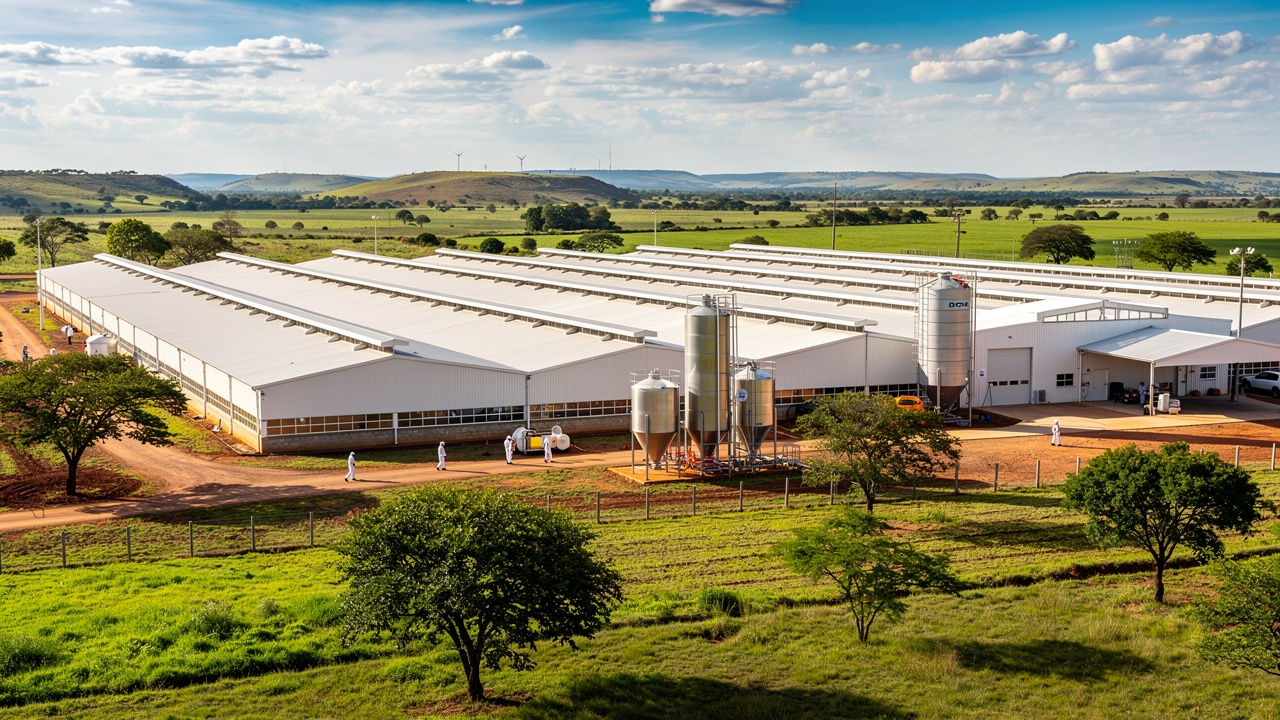
Adding to that momentum, Pluma SA (Grupo Pluma Agroavícola) announced a USD 50 million investment to build an integrated poultry industrial complex in Yhú, in the Caaguazú department. The project—structured in partnership with JBS and Pollpar for processing—will cover the entire chain: fertile egg production, chick rearing, fattening, and export processing. It is expected to generate approximately 200 direct jobs and establish Caaguazú as the country's new poultry hub, according to Vice Minister of Industry Javier Viveros.
Additionally, Granja San Miguel contributed USD 14.4 million focused on fertile egg and day-old chick production. Combined, the sector has amassed over USD 209 million in investment commitments for the 2025–2026 cycle.
New destinations: from Singapore to the UAE
The production surge is matched by an aggressive push into new commercial markets. The map of destinations for Paraguayan poultry has expanded significantly over the past twelve months:
- Singapore: In March 2026, Pechugón—a nearly 60-year-old fully integrated producer—shipped Paraguay's first Halal-certified chicken loads to the Singapore market. The first shipment exceeded 84,000 kg, with a monthly target of 170,000 kg. Pechugón is currently the only Paraguayan poultry company holding this certification.
- United Arab Emirates: The UAE's Ministry of Climate Change and Environment confirmed the opening of its market to Paraguayan poultry, an achievement led by Ambassador Carolin Konther and backed by Senacsa (the national animal health authority). The UAE imports poultry worth approximately USD 1.3 billion annually, making it one of the largest buyers in the Middle East.
- Taiwan: After nearly two years of technical negotiations and a decisive audit in October 2024, Taiwan authorized the entry of Paraguayan poultry meat. Taiwan imports around 200,000 tons per year valued at USD 340 million; industry projections estimate Paraguay could capture roughly USD 15 million per year in exports once supply chains are established.
- Other active markets: The Philippines (first shipments in 2025), Iraq, Vietnam, Kosovo, and Curaçao round out a diversified portfolio that reduces dependence on any single market.
Production and exports: the 2026 numbers
The sector grew approximately 10% in production during 2025 compared to the prior year, consolidating domestic per-capita consumption of around 40 kg per year—the highest in the country's history for this protein.
On the export front, between January and April 2026, sales of poultry meat, offal, and by-products reached 4,148 tons valued at USD 4 million, representing growth of 21% in volume and 12% in value versus the same period in 2025. The sector, through the Paraguayan Poultry Association (Avipar), projects surpassing 10,000 exported tons in 2026 and 15,000 tons in 2027.
Néstor Zarza, president of Avipar, notes that the industry currently generates 10,000 direct jobs across its supply chain—a number that will grow with ongoing investment.
Why this matters for agribusiness investors
The Paraguayan poultry case clearly illustrates the country's structural advantages for agroindustry: competitive production costs, abundant raw materials (corn and soy for feed), skilled labor, and a regulatory environment that facilitates the setup of processing plants. The integration of global players like JBS with domestic producers like Pechugón and Pluma shows that a fully integrated agri-industrial model—from genetics to certified export—is maturing rapidly.
For investors analyzing opportunities in the food value chain, Paraguayan poultry today offers clear levers: growing domestic demand, diversified export destinations including premium markets (Halal, Asia, Middle East), and international capital already committed. The links with the most room for new entrants include input production (quality corn, equipment, veterinary services), refrigerated logistics, and international certification services.