 Equipo ViaParaguay
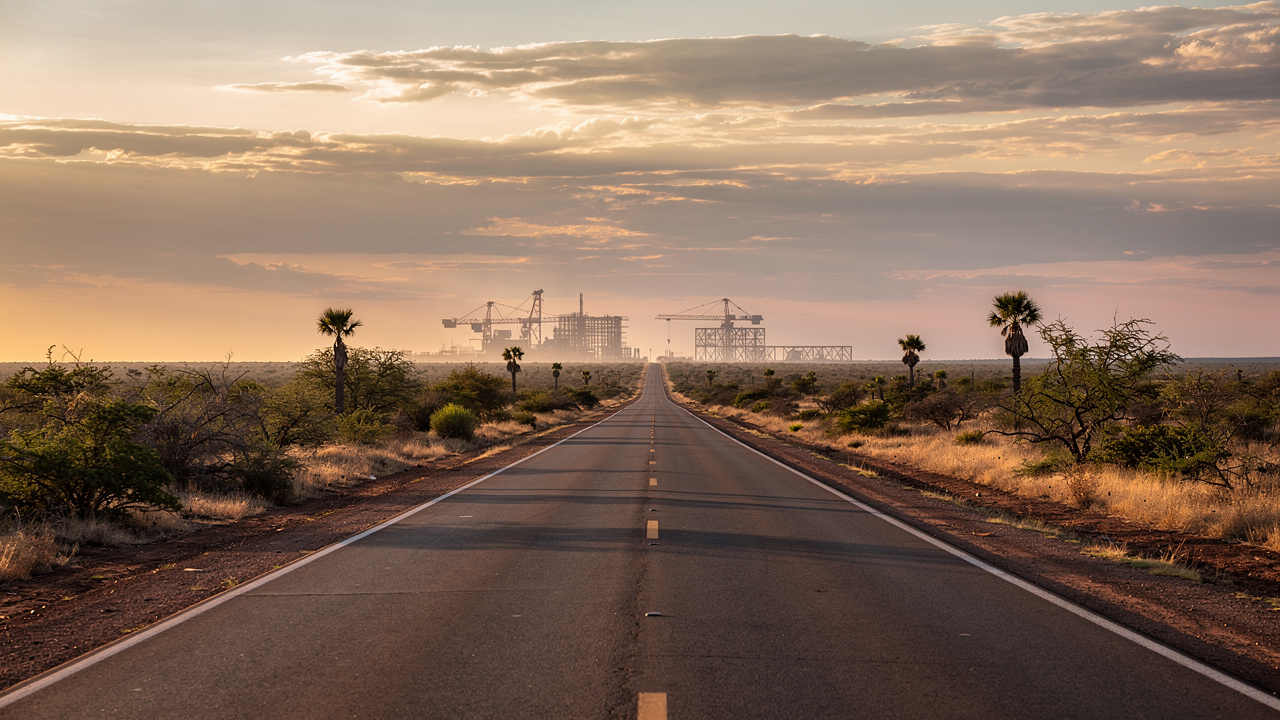
Paraguay is moving to position itself as a regional energy corridor through the Bioceanic Gas Pipeline, a project driven by the Vice Ministry of Mines and Energy with an estimated investment of more than USD 2,000 million and a route of about 1,000 km through the Paraguayan Chaco, the vast semi-arid plain that covers the entire western half of the country, sparsely populated and separated from the rest of Paraguayan territory by the Paraguay River. A gas pipeline is, in essence, a network of pipes that carries natural gas under pressure between two distant points — in this case, connecting fields on the Argentine side with industrial markets on the Brazilian side. The energy ministry presented the project as a "technically structurable" proposal at the Mercosur and Chile Gas Integration Forum, held in Asunción and organized by OLADE (the Latin American Energy Organization, the intergovernmental body that coordinates energy policy among countries in the region) together with CAF, the Latin American development bank. For now, it's a technical proposal in development, backed by diplomatic efforts and sector meetings, with no defined route or construction timeline published.
The Infrastructure Already Under Construction
The physical infrastructure around the project is already, in large part, a concrete and verifiable reality. In Carmelo Peralta, a district in the department of Alto Paraguay — one of the country's 17 departments, the farthest from Asunción, at the northern edge of the Chaco — construction is underway on the Bioceanic Bridge, which will cross the Paraguay River into Porto Murtinho, on the Brazilian side. The project is financed by Itaipú, the binational hydroelectric dam shared by Paraguay and Brazil, one of the largest power plants in the world, with an investment of about USD 136 million; as of mid-2026 it was 86% to 90% complete. Beyond financing the bridge, Itaipú is also the source behind much of the country's clean electricity grid: Paraguay generates nearly all of its electricity from hydroelectric dams, without relying on fossil fuels to produce it. That same geographic point is also Paraguay's gateway to the Bioceanic Corridor, an overland route connecting the Pacific and Atlantic oceans across Chile, Argentina, Paraguay, and Brazil. It's a road project distinct from the pipeline, even though it shares the "bioceanic" name and the same border crossing: one moves trucks and cargo, the other would move gas. Adding to that infrastructure is the Paraguay-Paraná Waterway, the navigable river route that today carries 80% of Paraguay's foreign trade and serves as the sea outlet for a country with no coastline of its own.
What Industries Gas Would Enable
That corridor — bridge, road, and waterway, already under construction or in operation — is what the pipeline would add to, with gas as a fourth layer of connectivity. It's also what explains Paraguay's interest in the project: which industries the country could host if it had a stable source of natural gas. Today Paraguay cannot host fertilizer production, ceramics, or other industrial processes that depend on that energy source, whether as fuel for high-temperature kilns or as a base chemical input. The Vice Ministry held specific meetings with two Brazilian industry chambers that use gas at scale: Abiquim, representing the chemical and fertilizer industry, and Anfacer, representing the ceramics industry. Paraguay already has a precedent for industry drawn in by its energy grid, though through a different path than gas: in Villeta, Atome's first green fertilizer plant is being built, using hydrogen produced with hydroelectric power instead of natural gas. It's the same type of industry that access to gas would expand, adding another energy source alongside the one already available. Projects of that kind typically set up in the country under the maquila regime created by Law 7547/2025, designed for export-oriented manufacturing, with specific tax benefits for that type of industrial operation.
That interest in having gas of its own also responds to the country's current energy bill. Paraguay imports 100% of the hydrocarbons it consumes: in just the first four months of 2026, it imported 701.9 million liters of diesel and 569.4 million liters of gasoline, above the volumes recorded in the same period of 2025. Having a domestic source of gas, even through the transit of gas from a third country, would change that equation for a large share of industry.
Argentine Gas, Paraguay as Transit
The gas that would first flow through the pipeline wouldn't be Paraguayan. The project's documented purpose is to carry natural gas from Vaca Muerta — one of the largest unconventional gas and oil fields in the world, located in Argentina — to Brazil, specifically to the states of Mato Grosso do Sul and São Paulo, with Paraguay serving as transit territory. According to the Paraguayan energy ministry, that transit generates the demand currently missing to eventually make developing the country's own gas viable: a market already in motion makes it easier to finance exploration that hasn't happened yet.
EPE, Brazil's government energy research company, projects that demand for natural gas not destined for power generation — the gas used directly by industry and other consumers — will grow 3.2% a year in Brazil, a figure revised upward from a previous projection of 2.5%. The same agency also anticipates strong growth in Brazil's own production starting in 2026, driven by the pré-sal, the gas and oil fields located beneath a thick layer of salt in the Santos and Campos basins, off the Brazilian coast.
Paraguay's Own Resource, Still Uncertified
Paraguayan territory itself also holds a natural gas resource, still uncertified. On September 1, 2026, private oil company Zeus Energy presented an estimate of 70 TCF — trillion cubic feet, the standard unit for measuring natural gas volumes, the same one used to size fields like Vaca Muerta — in the Carandayty-Boquerón basin, in the Chaco. The Vice Ministry of Mines and Energy noted that the figure "is nothing more than an estimated resource" — a preliminary calculation of what might exist underground based on geological studies, distinct from a certified reserve, which requires drilling and independent auditing — and that reaching certification would take another 3 to 5 years of exploration.
A Corridor Under Construction
Paraguay holds investment grade from Moody's and S&P, and already has a precedent for industry drawn to the country by its energy grid, with Bitcoin mining: it's now the world's fourth-largest Bitcoin mining hub. The Bioceanic Gas Pipeline adds to that same bet, this time built around gas rather than electricity, with the Chaco as the central piece of a corridor that would connect Argentine production with the Brazilian market, while also opening the door to industries that currently have no way to set up in Paraguay for lack of that energy source. Decisions on financing, routing, and contracts rest with the governments of Paraguay, Argentina, and Brazil, and with the companies that eventually invest in construction. The ViaParaguay team follows these developments closely and can help evaluate investment opportunities tied to energy and industry in Paraguay through the contact form.