 Equipo ViaParaguay
The commuter train that the MOPC (Ministry of Public Works and Communications) plans between Asunción, Paraguay's capital, and Luque, its neighboring city, will rely on the existing railway strip. It is a corridor where trains were already running in 1861. And there is a coincidence you can check at the museum: the Central Station, the Botanical Garden and Luque all appear on the historic map of Paraguayan railways, at kilometers 0, 7 and 15. Here is that history, from the López era to the end of passenger service, and what is being announced today.
One of South America's first railways
The world's first public steam railway opened in 1825, between Stockton and Darlington, in England. Paraguay had one of the first railways in South America. In 1856, Carlos Antonio López decreed the Asunción–Villarrica line, with the English engineer William Keld Whytehead as technical adviser. The locomotives and rails came from England.
According to the Railway Museum's chronology, in 1859 the tracks reached from the Port to the spot where the Central Station stands today. On October 21, 1861, again according to that chronology, the first passenger train ran, from the Central Station to Ybyraty-Trinidad. The line then kept growing toward Ypacaraí, Yuquyry, Areguá, Patiño, Cerro León, Pirayú and Paraguarí, up to 1864.
War, sale and the English era
In 1865, with the war, the network was dismantled. The museum's chronology records repairs in 1870 and, in 1877, the sale to Travassos Patri y Cía. In 1886 Luis Patri was granted the concession for the Paraguarí–Villarrica stretch, and in 1888 the stations of Escobar, Sapucai, Caballero, Ybytymí, Tebicuary and Hyaty appear.
In 1889 an English consortium created the Ferrocarril Central del Paraguay (F.C.C.P.). On December 25, 1889 the train reached Villarrica, and in 1894 the Sapucai workshops were set up; the museum keeps pieces from them.
On to Encarnación, and the decline
On June 9, 1911 the train reached Encarnación, the city on the Paraná River that sits on the border with Argentina. In 1913 a ferry service began at Pacú Cuá to cross the Paraná. The network also added a branch from San Salvador to Yguazú, in 1914, which reached Abaí in 1919.
The end came in stages. In 1996 the Yacyretá reservoir flooded stretches of track. In 1999 passenger service ended. In 2002 FEPASA (Ferrocarriles del Paraguay S.A.), the state railway company, was created.
Timeline at a glance
The milestones, according to the Railway Museum's chronology:
- 1856: Carlos Antonio López decrees the Asunción–Villarrica line.
- 1859: the tracks reach the Central Station from the Port.
- October 21, 1861: the first passenger train leaves, bound for Ybyraty-Trinidad.
- July 24, 1864: the station building is inaugurated; that year the line reaches Paraguarí.
- 1865: the war dismantles most of the network.
- 1877: the railway is sold to Travassos Patri y Cía.
- 1889: an English consortium creates the Ferrocarril Central del Paraguay; on December 25 the train reaches Villarrica.
- 1894: the equipment of the Sapucai workshops is completed.
- 1908: the iron bridge over the Pirapó is installed and the network switches to the Argentine gauge.
- 1910: the Argentine government gives financial aid to the British company to extend the line to Encarnación.
- June 9, 1911: the train reaches Encarnación.
- 1914–1919: the San Salvador–Yguazú branch is built and later extended to Abaí.
- February 8, 1961: the autonomous body Ferrocarril Presidente Carlos Antonio López is created.
- 1988: the Posadas–Encarnación railway bridge replaces the Pacú Cuá ferry.
- 1996: the Yacyretá reservoir floods the tracks.
- 1999: passenger trains stop running.
- 2002: FEPASA, Ferrocarriles del Paraguay S.A., is created.
The Museum at the Central Station
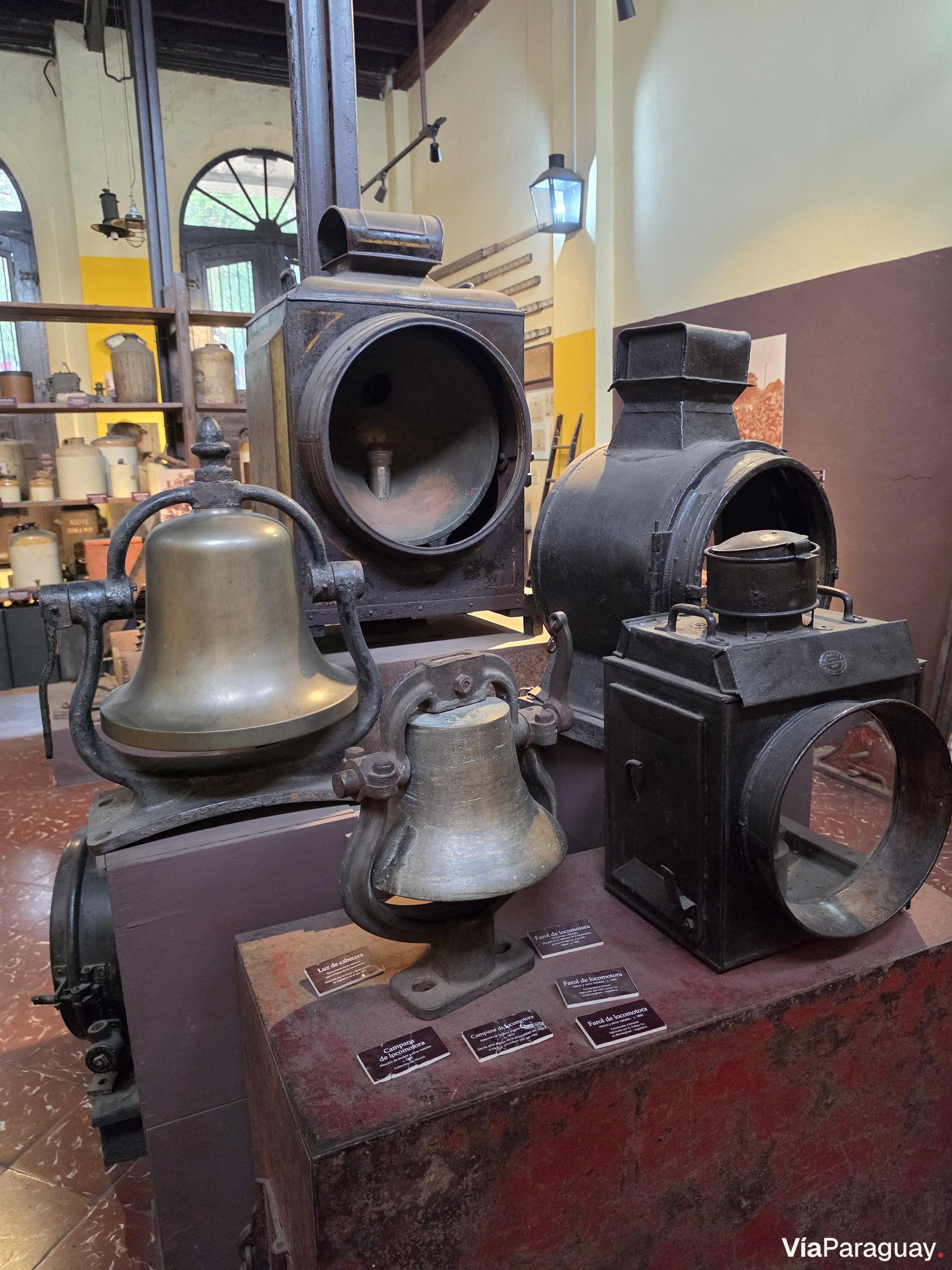
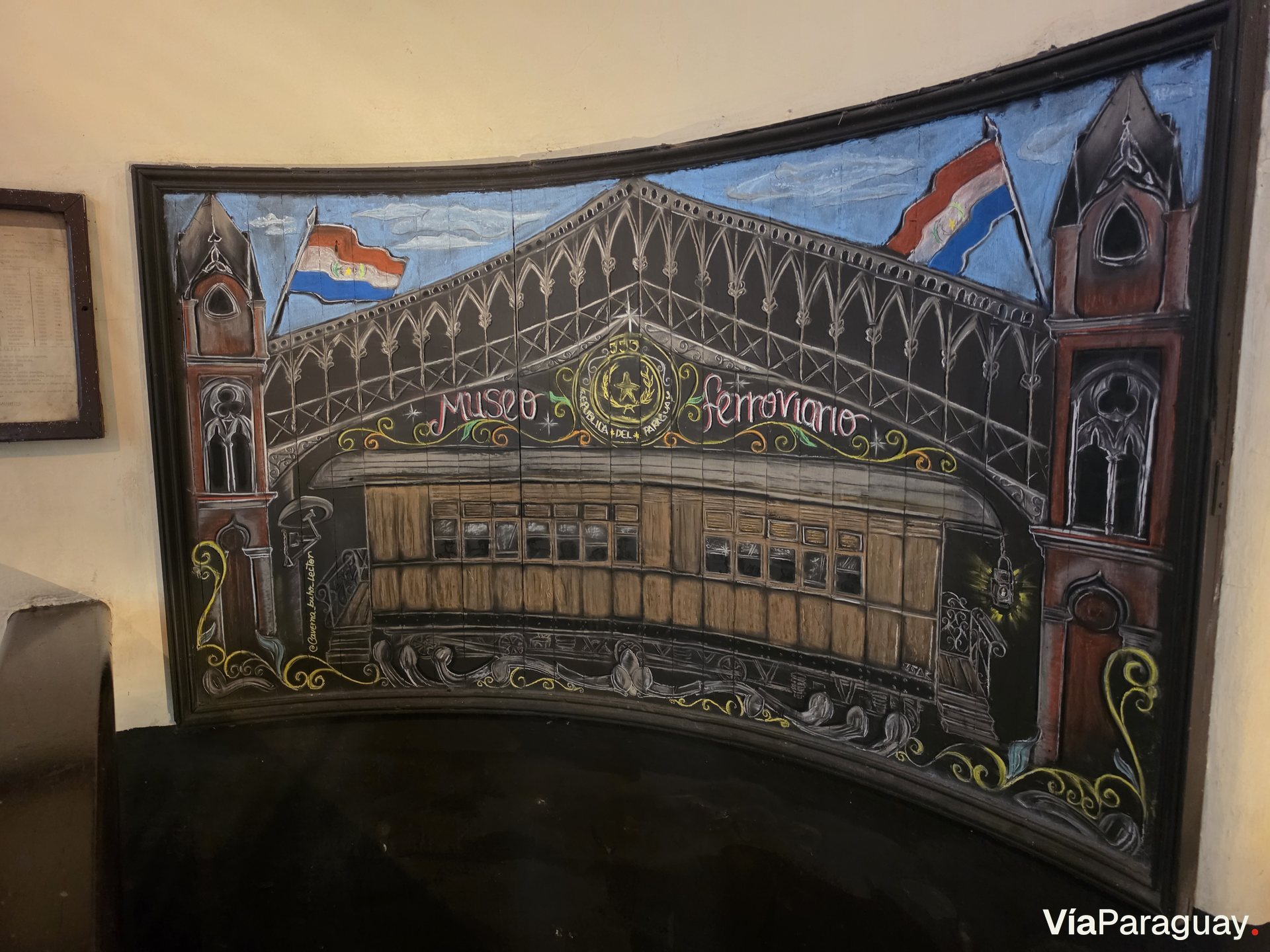
That story can be seen in Asunción, at the Museum of the Carlos Antonio López Railway Central Station, known as the Railway Museum, which is a Historic Monument. Among the museum's pieces are a ticket office with signs reading "First class only" and "Tourist class and government tickets," a telegraph, safes and clocks, as well as locomotive lamps and bells.
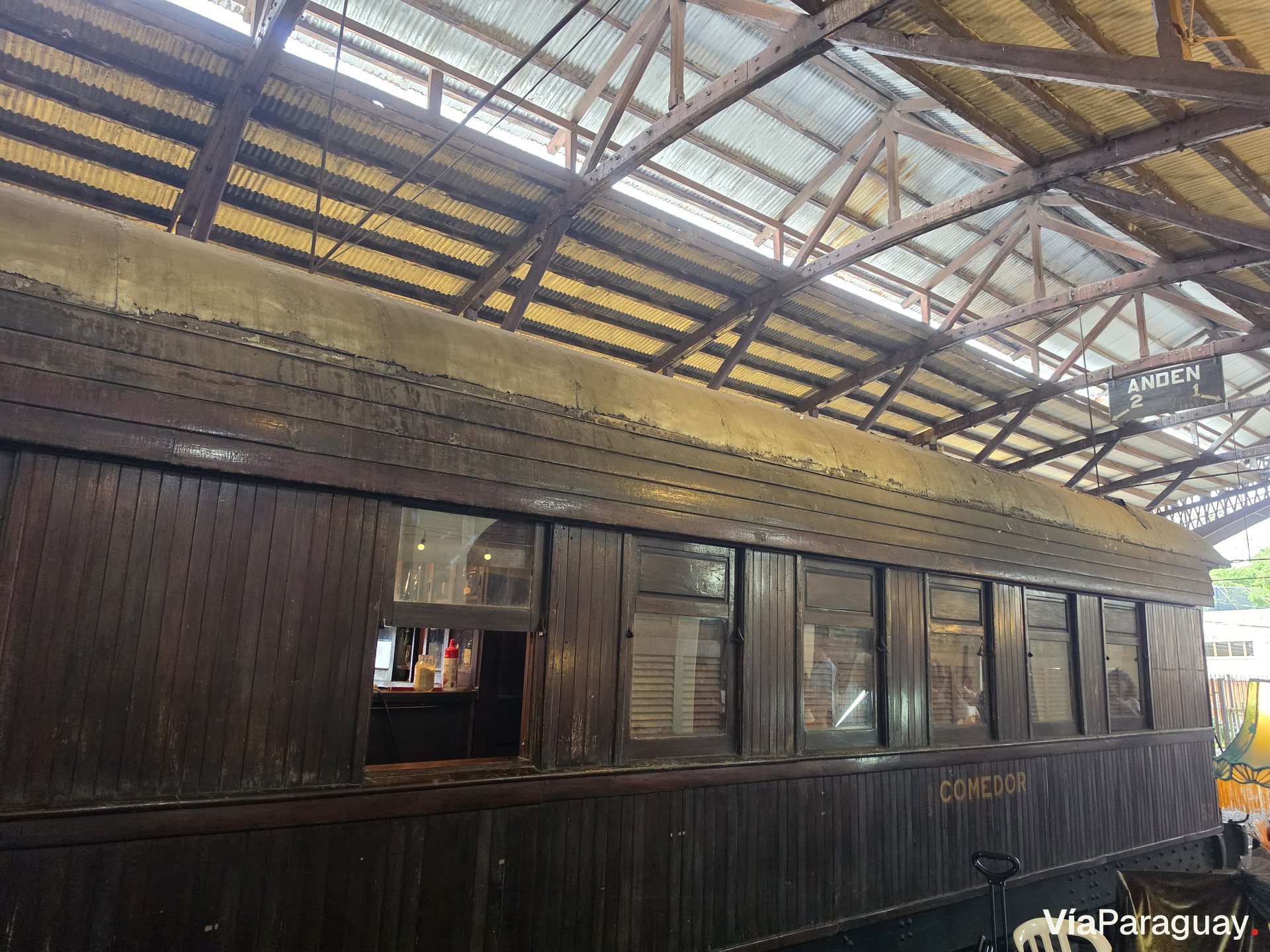
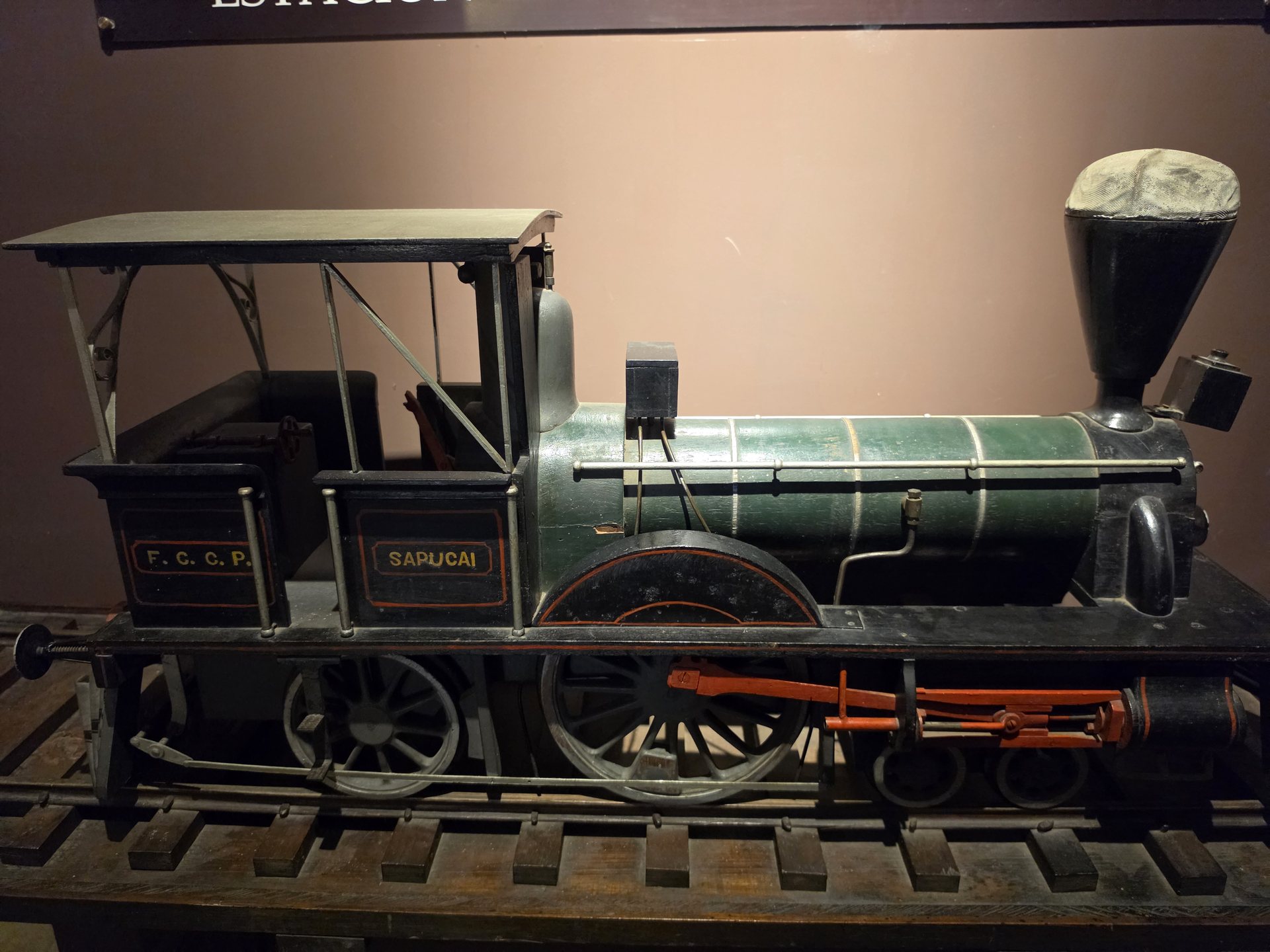
Under the hall stands a wooden passenger car, and inside there is a model of the "Sapucai" F.C.C.P. locomotive, display cases with pieces from the Sapucai workshop and the Asunción workshop, and the plan of a steam railcar of the Paraguay Central Railway.
The historic map "Estaciones del Ferrocarril paraguayo" lays out the route by kilometer: Asunción (km 0), Botánico (km 7), Luque (km 15), Areguá (km 30), Ypacaraí (km 44.7), Paraguarí (km 72), Villarrica (km 150) and Encarnación (km 370).
The museum's listing is in our directory: Estación Central del Ferrocarril, Asunción. For other places in the city, our guide to theaters, museums and cultural centers in Paraguay has more options, and the one on Asunción: gastronomy, nightlife and culture helps fill the rest of the day.
The commuter train: what is being announced
According to MOPC and press announcements, as of October 12, 2026 the first stage would connect Asunción and Luque over 18 kilometers of double track, with 11 stations and 100% electric trains. Estimates are about 40,000 passengers per day and about 26 minutes of travel between the two cities. Stations cited include Estación Central, the Avenida Artigas axis, Jardín Botánico, Parque Olímpico, the future Universidad de Taiwán, Ñu Guasu and Luque.
The MOPC estimates the investment at USD 450 million, although other figures cited range from 400 to 480. A 30-year concession is planned with Etihad Rail, with FEPASA as the national operator. The law approving the government-to-government agreement has been passed and promulgated, and the contract is expected by late 2026.
The announced calendar calls for early works to clear the right of way in the first half of 2027 and the award of design and construction in July 2027. Construction would take about 36 months, and the goal is to be operating for the 2030 World Cup. A second stage, from Luque to Ypacaraí (44 km in total), has no date or financing.
The project's details are in our story on the Asunción–Ypacaraí commuter train.
Why this history is back
The commuter train builds on the railway strip that served the first trains, this time with electric traction. The Central Station museum shows where that line comes from: the workshops, the wooden cars, the ticket offices and the map of stations. If you are planning a trip around the country, the complete Paraguay travel guide is a good starting point, and if you would like help organizing it, reach us through contact.